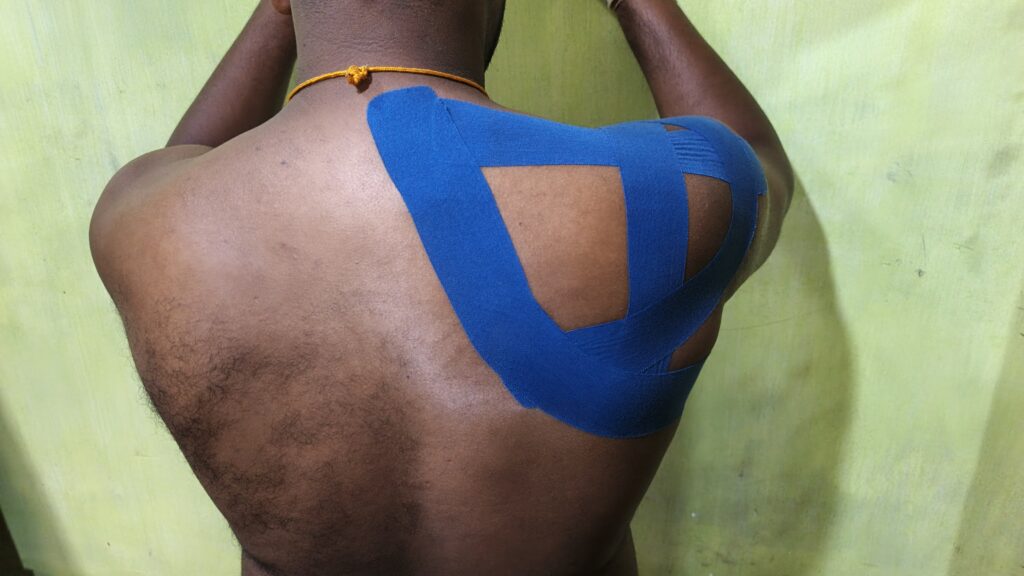
Scapular dyskinesia
Causes and Pathophysiology
Scapular dyskinesis formation is normally multifactorial and is caused by the imbalance of the scapular stabilizing muscles, changes in neuromuscular control, and biomechanical adaptation. An imbalance in muscles is one of the leading causes where the scapular stabilizers including serratus anterior, lower trapezius, and middle trapezius are weakened and delayed whereas muscles such as upper trapezius and pectoralis minor are overpowering or tight.
Neurological causes also play a role especially the involvement of the long thoracic nerves that have an effect on the serratus anterior functioning, causing scapular winging. On the same note, dysfunction of the spine accessory nerve may cripple the trapezius action. Postural abnormalities, including, but not limited to, forward head posture, rounded shoulders, which change the scapular resting position and muscle length-tension relationships are another significant contributor.
Repetitive loading and fatigue in overhead athletes cause poor scapular control, changes in muscle activation timing and compensatory movement patterns. Pain may also aggravate the dyskinesis, further through reflex inhibiting the stabilizing muscles. Consequently, the abnormal scapular movement decreases the subacromial space, provokes the stress on the rotator cuff as well as labrum, and leads to the development of a vicious circle of dysfunction and pain.
Signs and Symptoms
Patients who have scapular dyskinesis complain of diffuse shoulder pain, especially when they lift, throw, or use their arms constantly. The pain can either be experienced on the anterior shoulder, lateral shoulder or along the medial border of the scapula. Other patients complain of fatigue, weakness, heaviness, or instability of the shoulder instead of sharp pain.
Some of the abnormalities might be seen in the rising of the arm like winging of the scapula, premature scapular and excessive shrugging or unequal movement of the scapula in comparison with the other arm. In others, the patients complain about clicking, snapping or grinding pains in the shoulder blade. In early stages, the symptoms tend to be aggravated by repetitive activity and alleviated by rest.

Clinical Presentation
Scapular dyskinesia clinically is characterized by the disturbed scapular movement and positioning at rest and during dynamic shoulder motions. When resting, the affected scapula may be protracted, rotated downwards or tilted anteriorly. The abnormal patterns of movement during arm lift or drop are of the type of rapid downwards rotation, absence of smooth upward rotation or medial border prominence.
A tightness or tenderness of the pectoralis minor, upper trapezius, levator scapulae, as well as anterior shoulder structures and posterior shoulder structures, is usually found on palpation. The serratus anterior and lower trapezius are often weakened as seen in muscle strength testing. Functional tests (scapular assistance test and scapular retraction test) can alleviate pain or improve movement, which proves the importance of scapula in the symptoms of the patient.
The scapular dyskinesia is usually linked in the case of athletics to a decreased velocity of the throw, premature exhaustion, and decline in performance, and it usually comes with a rotator cuff tendinopathy or internal impingement.
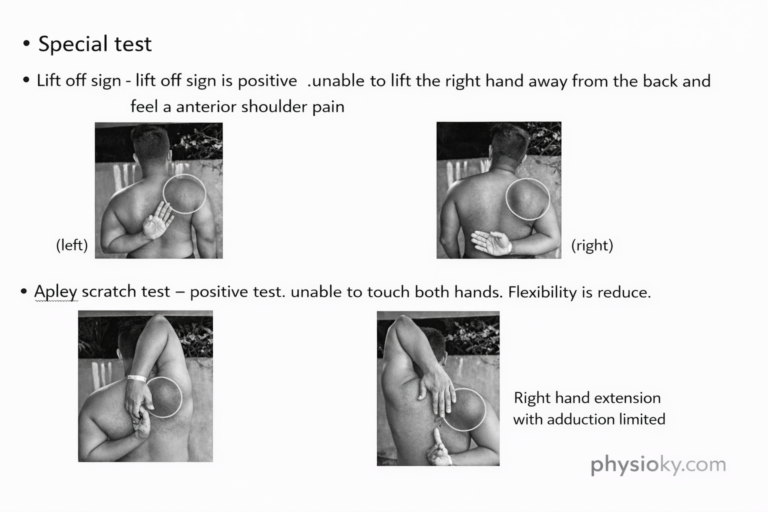
Physiotherapy Management -The acute stage.
Acute stage, the physiotherapy treatment of the acute stage is aimed at decreasing pain, inflammation and normal positioning of the scapula. A must is relative rest of the aggravating activities, in particular, overhead movements to eliminate further tissue irritation. As adjuncts, pain-relieving modalities are available like ice, electrotherapy or low-intensity soft tissue techniques.
Manual therapy is significant to deal with the tightness of the soft tissues especially in pectoralis minor, upper trapezius, and posterior shoulder muscles. Light stretching and myofascia release can be used to decrease abnormal scapular positioning. Correction of posture is highlighted in the initial phase, and the patient is taught to keep the spine and scapular position in the neutral posture throughout his day to day activities.
Scapular stabilizer activation is brought in gradually. Pain-free, low-load exercises that focus on the re-education of serratus anterior and lower trapezius activation are started and usually supported or in closed-chain positions. The aim during this stage is not to get strong but to control the neuromuscular and to get the time of muscle activation through proper timing.
Physiotherapy Management-Chronic Phase.